Older adult rehabilitation & fall prevention
Falls are not an inevitable part of ageing, and the risk can usually be reduced. Because several things contribute at once — strength, balance, medicines, eyesight, footwear, the home — a useful plan looks at all of them rather than only at exercise.
Individual rehabilitation plan — shaped by the assessment, reviewed as you progress
We assess your situation first, explain what the assessment shows, and agree a suitable rehabilitation direction with you. WhatsApp us to book, or ask first.
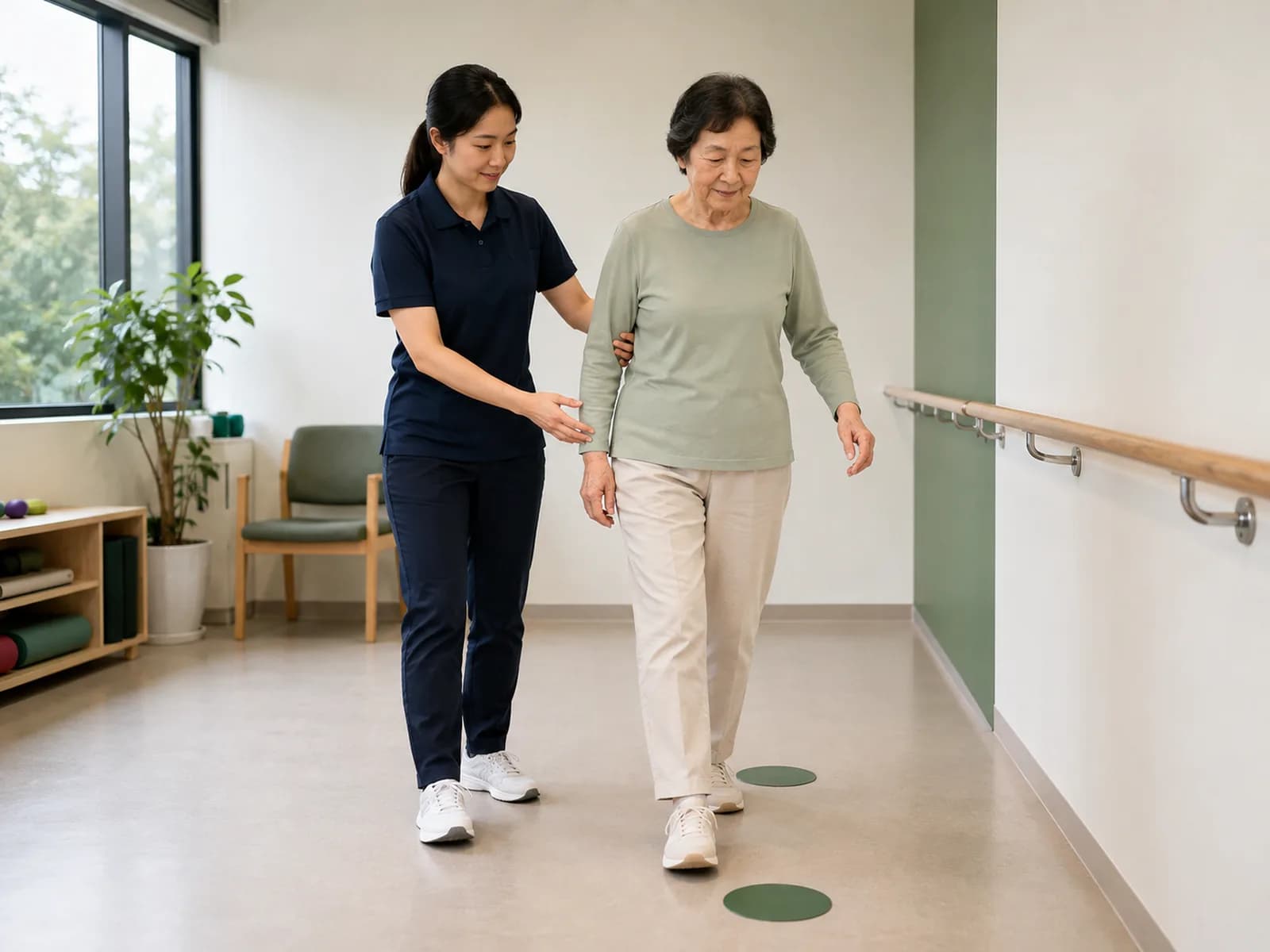
Most falls have several contributing factors rather than one cause: muscles weakening with age, conditions affecting balance or walking, blood pressure changes, medicines with drowsiness or dizziness as side effects, reduced vision or hearing, and hazards at home. International guidance recommends assessing risk across these areas and then tailoring a plan to the person. A web page cannot diagnose why someone is falling — that needs an in-person assessment and, at times, input from their doctor.
Families often notice the early signs before a fall happens: holding furniture while walking, taking longer to stand up, avoiding stairs or outings, shuffling, or a near-miss that was brushed off. Other possible causes of unsteadiness deserve attention rather than assumption: inner ear problems, blood pressure dropping on standing, heart rhythm changes, low blood sugar, and medicine side effects can all look similar to simple weakness, and more than one may be involved.
- Holding onto furniture or walls when moving around indoors
- Needing hands to push up from a chair, or several attempts
- Slower walking, shuffling, or avoiding stairs and outings
- A fall or near-fall in the past year, even if nothing was injured
- Fear of falling that is limiting what the person does
We take a broad look rather than only testing balance. That includes any falls in the past year and what happened, lower limb strength, walking and turning, standing balance, and confidence outdoors. We also go through medicines, vision and hearing checks, footwear, and the home environment with the person and their family, because these are among the most modifiable parts of the risk and often the easiest to improve first.
- Your symptoms and history: falls or near-falls in the past year, dizziness, and fear of falling
- Daily activities and function: walking distance, stairs, shopping, bathing, dressing
- Work, caring or household duties, and how much support is available at home
- Sleep: night-time toilet trips, lighting on the way, and daytime drowsiness
- Load and injury history: previous fractures, bone health, recent illness or hospital stay, and activity levels
- Movement: how the person stands up, walks, turns and steps over an obstacle
- Strength, control and balance: leg strength, standing balance and reaction to a small push
- Neurological and general screening: sensation in the feet, muscle power, blood pressure changes on standing, vision and hearing, and a review of medicines with the doctor
Balance and strength training that is genuinely challenging is the part with the best support, usually several times a week and progressed over time. Depending on the assessment, the plan may also include walking practice, safe transfer technique, a walking aid review, home hazard suggestions, and a prompt for the doctor to review medicines. We explain each element, the person can decline any of it, their preferences and what the family can support shape the plan, and we adjust as they respond; we do not follow a fixed protocol.
Consistency matters more than intensity here, and small daily changes add up: clearing trip hazards, better lighting on the route to the toilet at night, well-fitting shoes with a grip, and a short balance routine that fits into an existing habit. Withdrawing from activity usually increases risk rather than reducing it. We plan for a setback week after illness, and at each visit we review walking, chair-rise ability, balance tests and any near-falls before changing the activity and load.
A physiotherapy assessment is a reasonable step for unsteadiness and weakness, and it works best alongside the person's doctor. Arrange a prompt medical review — before starting exercise — for new or worsening dizziness, light-headedness on standing, blackouts or fainting, palpitations, new confusion, a recent change in medicines that coincided with the unsteadiness, or any fall where the person was unwell beforehand. Vision and medicine reviews are worth arranging in their own right. The situations below need an emergency department without delay.
- Sudden weakness or numbness on one side, a drooping face, or slurred speech — treat as a possible stroke
- A blow to the head during a fall, loss of consciousness, or taking blood-thinning medicine after any head injury
- Being unable to get up after a fall, or unable to bear weight on a leg afterwards
- Severe pain, an obvious deformity, or a hip or leg that looks shortened or turned after a fall
- Fainting or blacking out, chest pain, or sudden breathlessness