Manual Therapy
Manual therapy is a hands-on part of physiotherapy. After assessing your symptoms, movement and daily needs, the physiotherapist may use suitable techniques to support comfort and movement while building an active rehabilitation plan with you.
We take time to assess, explain and follow up, and agree a suitable rehabilitation direction with you. WhatsApp us to book, or ask first.
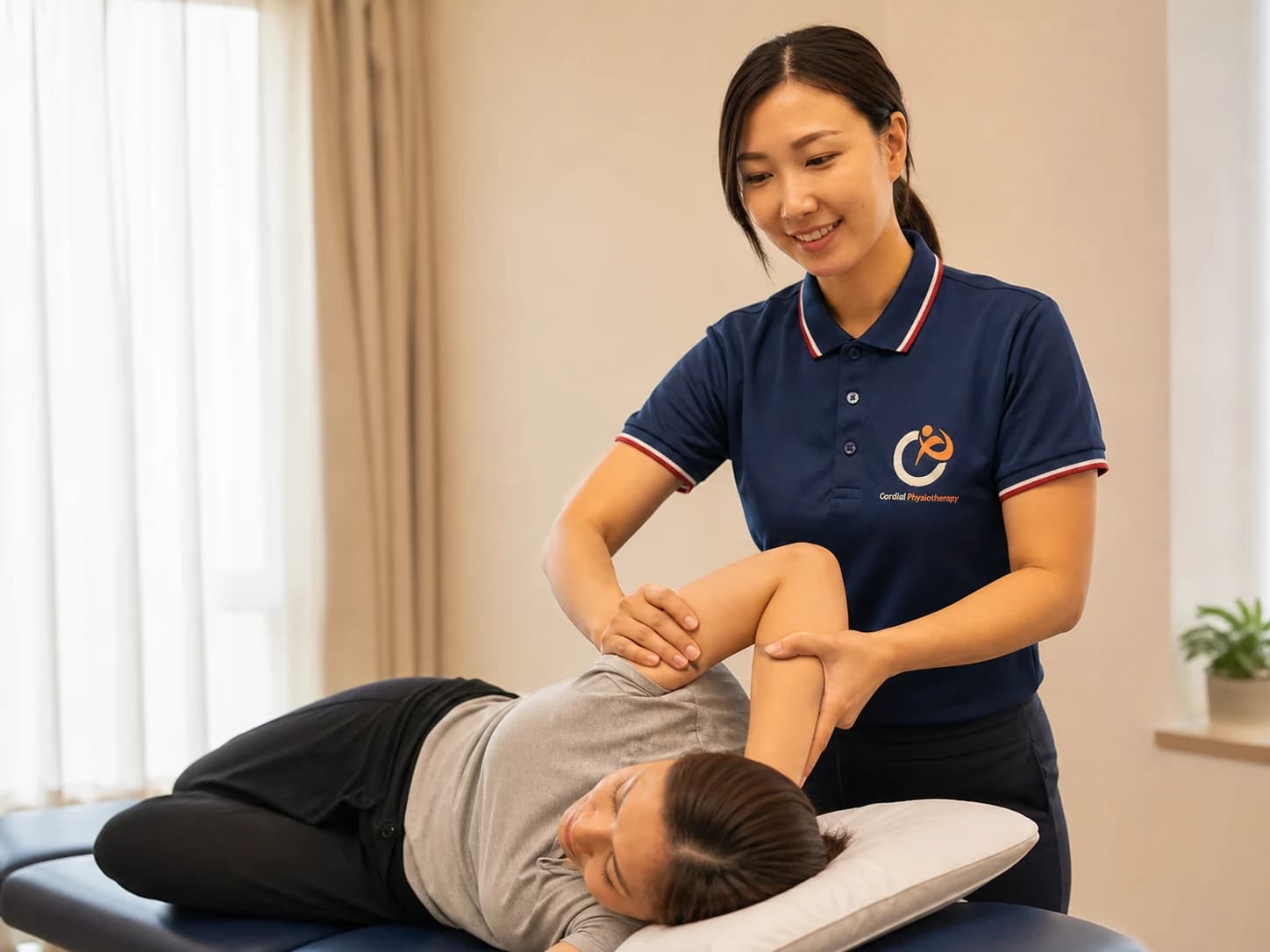
Manual therapy includes hands-on techniques applied to muscles, joints and other soft tissues. It is not simply a routine massage: the technique, position and amount of pressure should be selected according to the assessment, your response and the agreed treatment goal.
We first ask about your symptoms, activities, work, sleep and recent changes, then examine relevant movement and function. If manual therapy is appropriate, treatment may include gentle joint movement, soft-tissue techniques or supported movement practice. We monitor comfort and movement during the session and adjust or stop when needed.
It may be considered when pain, stiffness or reduced movement makes everyday activity or exercise difficult—for example with some neck, back, shoulder or post-injury problems. It is not suitable or necessary for everyone, so the decision depends on assessment findings, your preferences, health history and response to treatment.
The suitability and safety of manual therapy need to be considered individually. Treatment does not always include manipulation — the physiotherapist selects the technique, position and pressure according to your assessment and response rather than following a fixed routine. Please tell us about anything listed below before treatment, as it may change which techniques, if any, are appropriate. Your physiotherapist will explain the proposed technique before using it; you can ask questions, decline, or ask to stop at any point, and pressure, position or technique can be adjusted to your comfort. Temporary soreness or tenderness for a day or so afterwards can happen, but this is not something to simply push through — tell us if discomfort feels excessive, lasts longer than expected, or does not settle as anticipated. The following need prompt medical care rather than routine manual therapy: sudden or rapidly worsening weakness or numbness, loss of bladder or bowel control or saddle/perineal sensory change, chest pain, breathing difficulty, or fainting or loss of consciousness.
- Blood-thinning medicine, or a bleeding or bruising tendency
- Osteoporosis or a recent fracture
- Recent surgery or an injection near the treatment area
- Pregnancy, when the proposed position or area is relevant
- A skin condition, wound or infection over the area to be treated
Hands-on treatment may provide a useful window to move more comfortably, but longer-term progress usually also depends on graded exercise, activity adjustment and self-management. We use your response to choose realistic exercises and progression, rather than relying on passive treatment alone.