
Ergonomics Assessment
An ergonomics assessment looks at your desk, workstation and movement habits together with your symptoms and daily tasks, so any changes we suggest are practical for how you actually work — not a generic checklist.
We take time to assess, explain and follow up, and agree a suitable rehabilitation direction with you. WhatsApp us to book, or ask first.
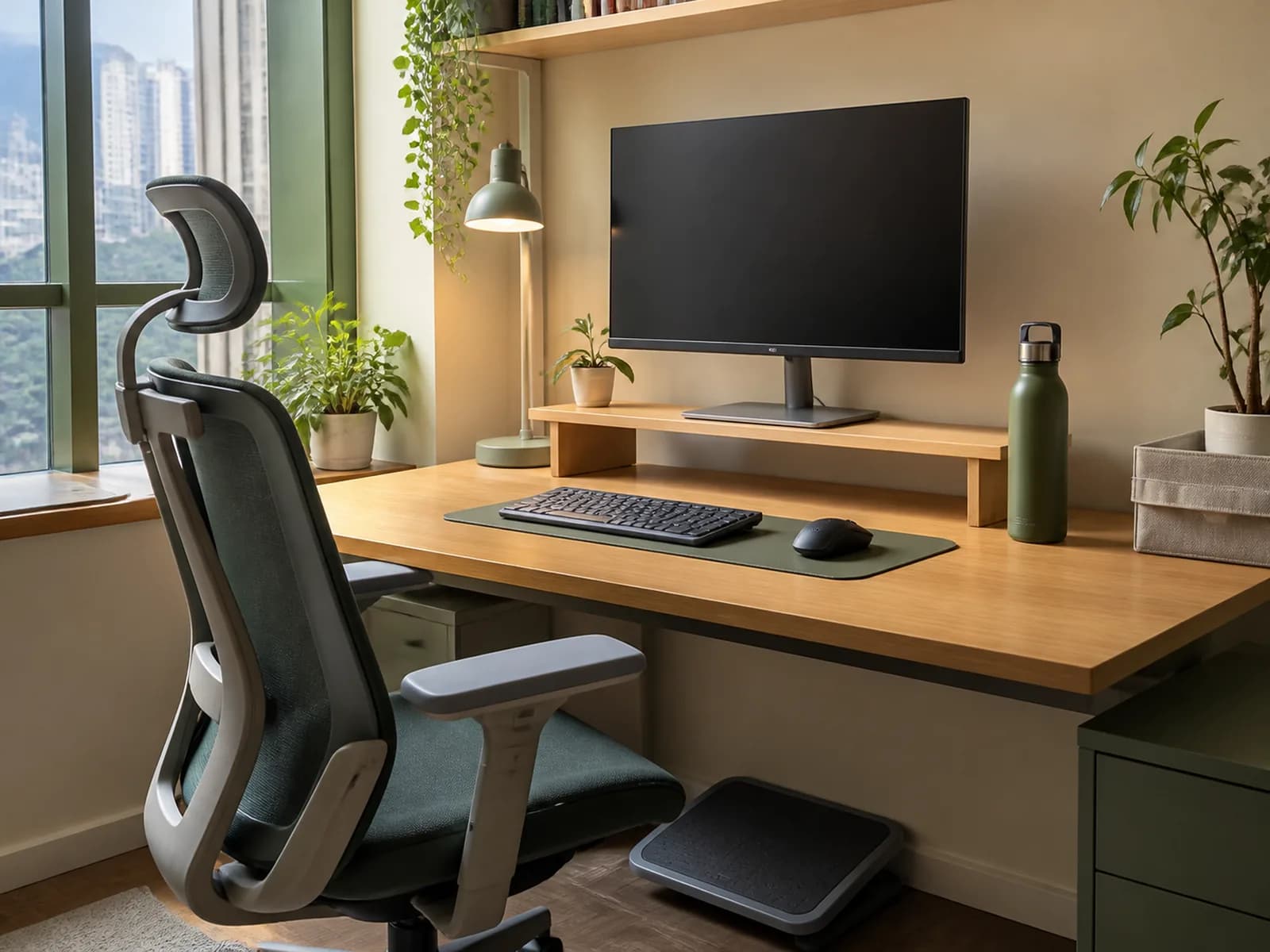
An ergonomics assessment looks at how your workstation, daily tasks and movement habits relate to your comfort, symptoms and function — not just how you sit at one moment. We look at your desk, chair, screen and equipment together with how you actually work through the day, so recommendations are practical for your real tasks rather than a generic template.
An ergonomics assessment may be useful if your work involves a desk, computer or repetitive tasks, or if your set-up recently changed — for example switching between office and home working. It does not diagnose a specific condition, and it is not only for people already in pain.
- Desk-based or computer-heavy work
- Hybrid or home-based work with a changing set-up
- Neck, shoulder, back or wrist discomfort you feel is linked to work tasks
- Repetitive or sustained tasks, such as typing, mousing or screen use
- Returning to work, or changing role, desk or equipment
Before making any suggestions, we ask about your symptoms and how they behave, your work tasks and how long you spend on them, your current desk, chair, screen and equipment, and — where relevant — your movement, strength and activity tolerance. We also ask about your breaks, task variety, daily function outside work and what you would like to achieve, so recommendations reflect your actual routine rather than an assumed one.
The assessment usually combines observation with a practical trial of adjustments — for example chair height and support, desk height, screen position, and keyboard, mouse or device placement where relevant. We also look at task and movement strategy, such as how you might vary position or break up sustained tasks. Your comfort and what actually works for you guide the process; it is not a rigid checklist for one 'correct' posture.
You can expect prioritised, practical suggestions — usually starting with changes that do not require buying new equipment, where this is reasonable. This may include movement or activity variation and self-management ideas, along with what to monitor over the following days or weeks. Where appropriate, we discuss a response-led review, adjusting suggestions based on how your comfort and symptoms change.
- Prioritised, practical adjustments to try first
- Equipment-independent options where reasonable, before equipment changes
- Movement, activity variation and self-management suggestions
- What to monitor over the following days or weeks
- Response-led review where appropriate, rather than a one-off fixed plan
This page describes an individual, one-to-one ergonomics assessment. If you are a company, NGO, school or other organisation looking to arrange a health talk, workshop or group session — for example general posture or ergonomics education for a team — this is arranged as a separate outreach and organisation programme rather than an individual assessment. See our organisation and corporate outreach physiotherapy service (linked below) to discuss a proposal for your group.
An ergonomics assessment is not a diagnosis, and it cannot promise that pain will improve or that injury will be prevented — workstation and setup changes are usually only one part of a broader picture that may also involve movement, load and general health. If your symptoms persist or worsen despite practical changes, an individual clinical assessment is usually a sensible next step. Some symptoms need medical attention straight away rather than a routine ergonomics assessment: chest pain, breathing difficulty, fainting or loss of consciousness, sudden or rapidly worsening weakness or numbness, or any other acute, serious change. Please seek emergency care immediately if you notice any of these.
There is no single posture that is correct for an entire working day — comfortable, neutral positions are a reasonable aim, but staying still in any position for too long can itself become uncomfortable. Alongside any setup changes, varying your position, taking breaks, moving between tasks and managing your overall workload may all play a part in how you feel.