
Instrument-assisted Treatment
After assessment, the physiotherapist may select an appropriate modality, mode and intensity according to your symptoms, treatment area, health and response. Options may include TENS, therapeutic ultrasound, interferential therapy, heat packs or infrared heat. These are optional adjuncts rather than a standard treatment for everyone.
We take time to assess, explain and follow up, and agree a suitable rehabilitation direction with you. WhatsApp us to book, or ask first.
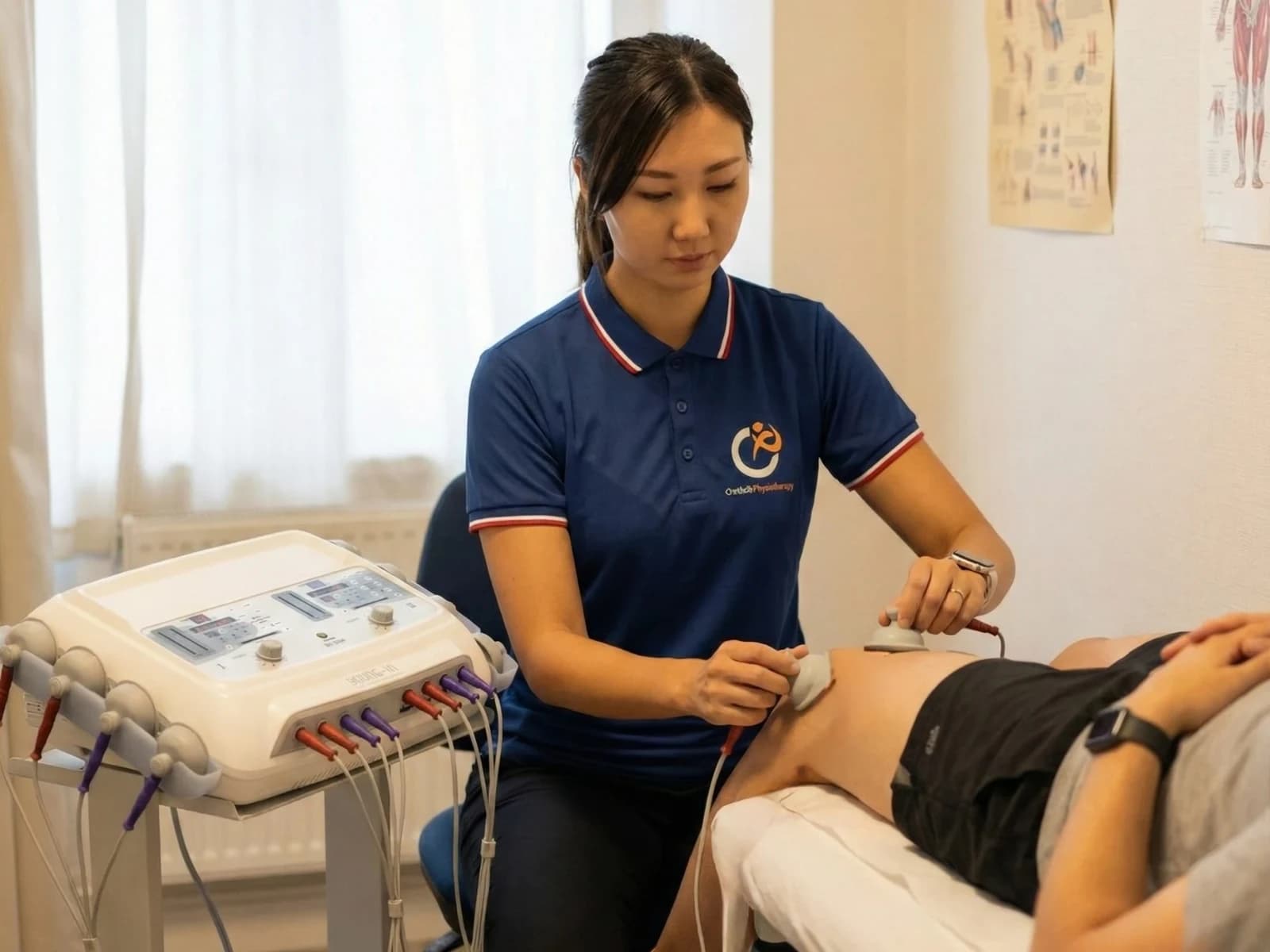
Instrument-assisted treatment is a broad category of physical modalities used selectively within physiotherapy. The physiotherapist chooses the device, placement, mode, intensity and duration according to assessment and monitors your response. Common options include, but are not limited to:
- Transcutaneous electrical nerve stimulation (TENS)
- Therapeutic ultrasound
- Interferential therapy
- Electrical or moist heat packs
- Infrared heat lamps
We first clarify the symptom pattern, daily limitations, health history and goals, then assess relevant movement, function, skin condition, circulation and sensation. We also ask about pregnancy, pacemakers or other implanted electronic devices, previous reactions and current treatment. A modality is used only if assessment suggests it is appropriate and you agree after the expected sensation, alternatives and limitations are explained.
TENS or interferential therapy commonly feels like comfortable tingling or buzzing. Therapeutic ultrasound may feel like movement of the gelled probe, mild warmth or no obvious sensation. Heat packs and infrared lamps should feel comfortably warm, never burning. Tell the physiotherapist immediately about excessive heat, burning, sharp pain, skin irritation, marked discomfort, dizziness or any unexpected change.
A modality may be considered when pain, muscle tension, stiffness or swelling makes movement or exercise difficult, or as a short trial within a broader plan. Depending on the modality and condition, it may help some people with short-term symptom relief, comfort or swelling management. It is not suitable or necessary for everyone. Evidence and response vary, and reliable evidence that these modalities speed inflammation reduction or tissue repair is lacking; lasting relief should not be assumed. We review whether it produces a meaningful change in symptoms or function before continuing.
Precautions depend on the modality, device guidance and body area — a contraindication for one modality does not necessarily apply to another. We screen for the relevant risks below before choosing a modality; if there is uncertainty, we use another approach or recommend medical advice first.
- Electrical stimulation (TENS/interferential): may need to be avoided or modified with a pacemaker or implanted electronic device, pregnancy, epilepsy, heart problems, damaged skin or reduced sensation
- Therapeutic ultrasound: needs separate screening for the proposed area, including pregnancy, active cancer, infection, bleeding, a suspected blood clot, impaired circulation or sensation, and damaged skin
- Heat packs/infrared: needs careful temperature, distance and skin monitoring, as burns or overheating are possible, especially with poor circulation or reduced sensation
Passive modalities do not replace education, activity adjustment or progressive exercise. When a modality is useful, its role is usually to make movement or participation more manageable while we work on mobility, strength, control and the tasks that matter to you. The plan is adjusted according to your response rather than repeating a machine treatment by default.