
Sports Injury Rehabilitation
Sports rehabilitation is an assessment-led process that works towards the specific demands of your sport, not just resting until pain settles. We assess the injury and your goals, build a staged programme, and progress it against your response and agreed criteria rather than a fixed timeline.
Emergency symptoms need medical care first
These programmes are not for emergencies. Sudden severe pain, a suspected fracture, new or spreading weakness or numbness, chest pain, breathing difficulty or loss of consciousness need urgent medical care rather than a routine rehabilitation appointment.
We take time to assess, explain and follow up, and agree a suitable rehabilitation direction with you. WhatsApp us to book, or ask first.
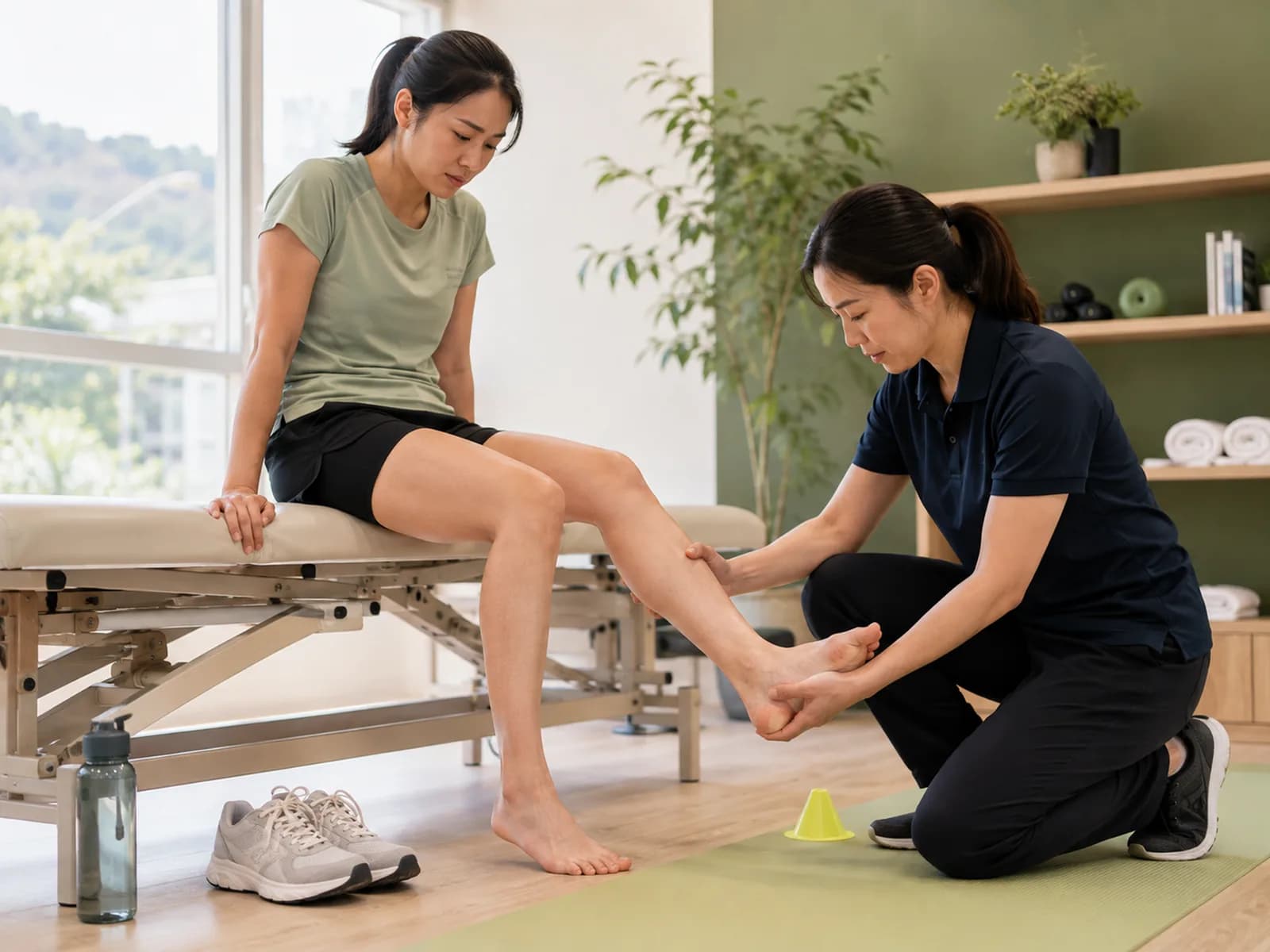
It is structured rehabilitation for an injury linked to sport, training or an active job, aimed at helping you return to your activity as safely as is reasonable. It may suit some people and not others, and it does not replace acute medical care for a serious injury.
- A recent sprain, strain or knock affecting training or play
- An overuse or load-related problem, such as a painful tendon that builds up over weeks
- A recurring injury that keeps interrupting the same activity
- Returning to running, gym, court or team sport after a longer break or a previous injury
- Wanting a plan and progression criteria rather than only symptom relief
Assessment looks at the injury and at the demands you are returning to, so the plan targets the gap between the two.
- The injury: how and when it happened, how irritable it is now, and what makes it better or worse
- Movement, mobility, strength, control and, where relevant, balance and power
- Training and load history: recent volume, intensity, surface or footwear changes, and previous injuries
- The demands of your sport or activity, and the level you want to get back to
- Sleep, general health, and any medical screening indicated by your history
Your programme is built from the assessment and usually moves through overlapping stages. Progression is guided by how symptoms respond and by meeting the target for each stage, so the pace is individual and the stages can overlap or be repeated.
- Settle irritable symptoms and restore pain-free movement and basic control
- Rebuild strength and tissue capacity with progressive loading
- Add speed, power, change of direction and sport-specific drills as tolerated
- Graded return to training, then to full practice and competition
We review progress against the target for each stage and the demands of your sport, not just against the calendar. Return-to-sport decisions are made with you using criteria such as comparable strength and control, tolerance of sport-specific load, and confidence, and we plan how to reintroduce training so setbacks are less likely. Timing and outcome vary between individuals, and we cannot promise a particular return date.
Between sessions you will usually have a short programme of targeted exercises with progression rules, plus guidance on managing training load — how to build volume and intensity gradually, space out hard sessions, and adjust on days when symptoms are more reactive. Some muscle effort or mild, short-lived soreness can be acceptable; sharp pain, swelling, giving way or symptoms that last into the next day mean you should ease back and let us know so the plan can be adjusted.
Sports rehabilitation may help some people return to activity, but it is not suitable or necessary for everyone and we cannot promise a specific outcome. Some injuries need medical or surgical assessment first.
- Seek urgent or emergency care for a suspected fracture or dislocation, an obviously deformed joint, inability to bear weight or use the limb, rapid or severe swelling, a locked joint, loss of sensation, chest pain, breathing difficulty or fainting
- Arrange a prompt medical review for a joint that repeatedly gives way, a significant loss of strength or movement that is not improving, a hard or hot swollen calf, fever with a hot swollen joint, or pain that keeps worsening despite sensible rest and modified activity
- For most training aches, mild strains and manageable flare-ups without these features, an assessment appointment is a reasonable next step