Modern Acupuncture
Modern acupuncture is one option we may use within physiotherapy at our Yau Ma Tei clinic. After assessing your symptoms and health history, your physiotherapist will discuss whether it is appropriate, explain what a session involves and, where useful, combine it with hands-on treatment or rehabilitation exercise. It may help some people with short-term symptom relief; it is not suitable or necessary for everyone.
We take time to assess, explain and follow up, and agree a suitable rehabilitation direction with you. WhatsApp us to book, or ask first.
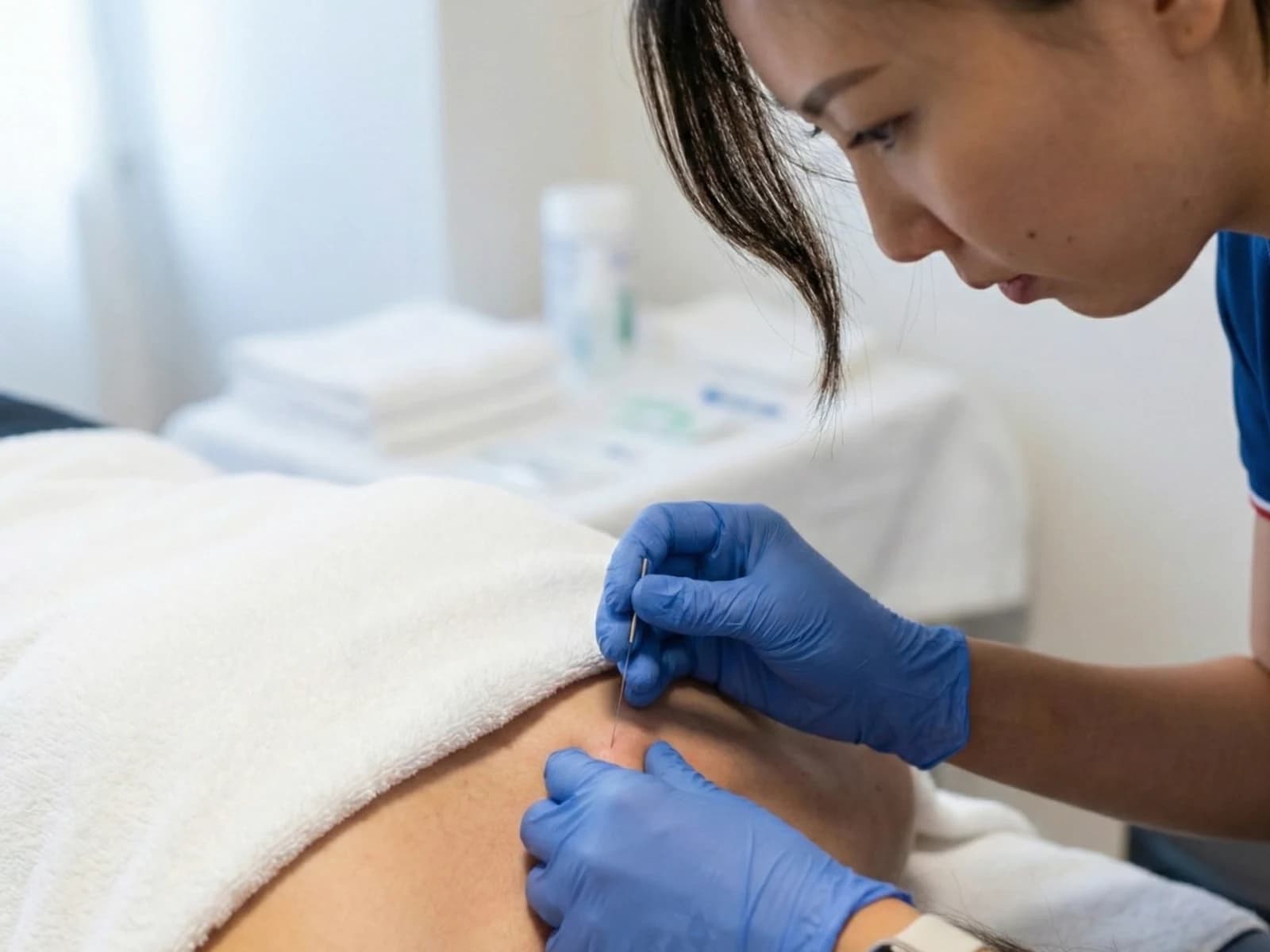
Modern acupuncture uses very fine, single-use sterile needles placed at selected points after assessment. In physiotherapy it is one part of a wider plan rather than a standalone therapy: it may sit alongside hands-on treatment, exercise and activity advice. At our clinic it is provided by a Hong Kong registered physiotherapist who holds an acupuncture qualification accredited by the Hong Kong Physiotherapy Association (HKPA), as part of your physiotherapy care.
We start with an assessment: your symptoms and how they behave, your work and daily activities, health history, medicines and any treatment you are already having. If acupuncture is appropriate, we explain what we plan to do and ask for your consent before any needle is used. Needles may be left in place for a short period while you rest in a supported position, and we check how you are feeling. Depending on the assessment, the session may also include hands-on treatment, exercise or self-management advice.
- Assessment of symptoms, movement and daily activities
- Explanation and consent before any needling
- Single-use sterile needles, discarded after one use
- A short rest with regular checks on how you feel
- Exercise and self-management advice before you leave
It may be considered when pain or muscle tension is limiting your movement, sleep or ability to start rehabilitation exercise — for example with some neck, shoulder, back or overuse problems. Current evidence suggests it may help some people with short-term symptom relief, while others notice little difference, so it is neither necessary nor suitable for everyone. If the assessment points elsewhere, we will say so and suggest another approach.
- Persistent neck, shoulder or back pain that limits daily activity
- Muscle tension or tenderness that makes exercise hard to start
- Pain that disturbs sleep or concentration
- As an addition to hands-on treatment and exercise, not a replacement
Acupuncture is generally well tolerated when single-use sterile needles are used by a trained clinician, but brief soreness, small bruising or feeling light-headed can happen. Infection is uncommon, and serious complications are very rare but can depend on the area treated. Please tell us about anything below before treatment. You can decline at any time; if you feel unwell we will stop, and unexpected chest pain, breathing difficulty or worsening symptoms after treatment need prompt medical attention.
- Blood-thinning medicine, a bleeding or clotting disorder, or bruising easily
- Pregnancy, or if you are planning a pregnancy
- Skin conditions, wounds, infection or swelling over the area to be treated
- Fear of needles, previous fainting, or a strong reaction to earlier needling
- Medical conditions such as diabetes, epilepsy, a pacemaker or implanted device, or reduced immunity
- Other current treatment, recent surgery, injections or medicines
Responses vary between people. Some feel looser or more comfortable soon after a session, some notice a change only over the next day or two, and some feel no difference at all — that is a normal outcome too. Mild soreness or tiredness for a day or two afterwards can happen. We record what changes after each session and use that to decide whether to continue, rather than a fixed number of visits, and we do not promise a set result.
Where needling helps, the relief may be short-term, so we use it as an opportunity to move, load and train more comfortably. Longer-term progress generally depends on graded exercise, adjusting daily activity and sleep, and understanding what aggravates your symptoms. Where appropriate, acupuncture is paired with a rehabilitation plan you can carry out at home, so progress does not rely on passive treatment alone.