Focused Shockwave Therapy
Focused shockwave therapy (focused extracorporeal shock wave therapy, or ESWT) is an optional, assessment-led modality. After assessing you, the physiotherapist may consider it for some persistent tendon or soft-tissue problems, alongside active rehabilitation. It is not suitable or necessary for everyone, and whether it is used is decided with you.
We take time to assess, explain and follow up, and agree a suitable rehabilitation direction with you. WhatsApp us to book, or ask first.
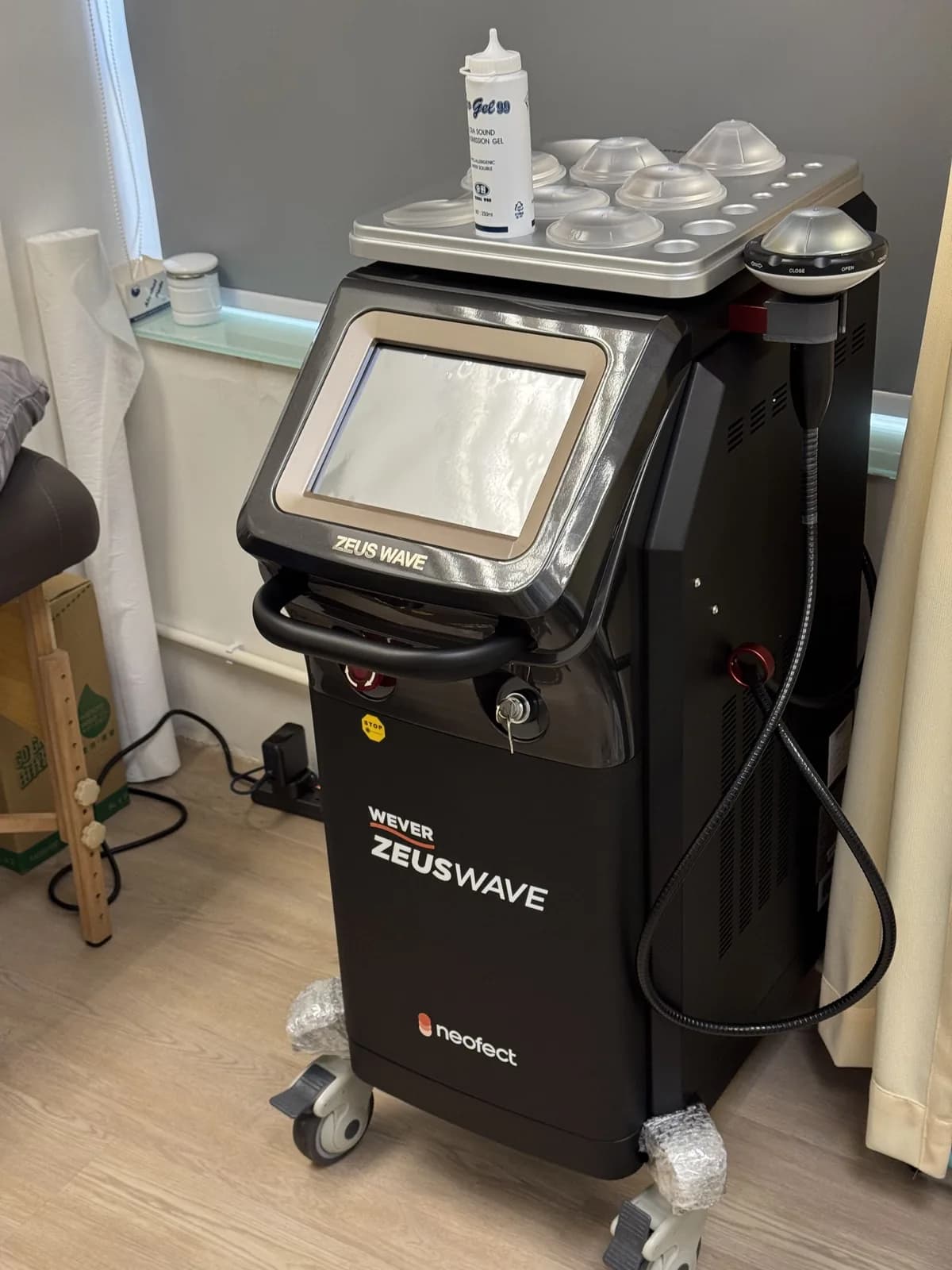
Focused shockwave therapy sends short acoustic pressure pulses through the skin, via a layer of gel, and concentrates them on a selected area. In our clinic the physiotherapist uses it only after assessment, as one possible part of a wider plan, and adjusts it to your response. Although gel is used, it is not electrical stimulation or therapeutic ultrasound, and it is separate from the options on our instrument-assisted treatment page.
Before suggesting it, we ask about your symptoms, how long they have lasted, what eases or aggravates them, previous treatment and your goals, and review your medical history, medicines and any reports you bring. We then examine the area and how it copes with movement and load. If the cause of your symptoms is unclear, we may suggest seeing a doctor or having imaging first. Focused shockwave is offered only if the assessment suggests it may be appropriate, the safety screening below raises no concern, and you agree after its expected sensation, possible side effects, alternatives and limits have been explained.
Gel is applied and the applicator is held against the skin over the agreed area. You may feel a series of tapping or pulsing sensations, and the area can feel uncomfortable or sore while it is treated, especially over a sensitive spot. The physiotherapist starts at a lower intensity and adjusts it with your feedback. Tell us at any time if it feels too strong: we can lower the intensity, pause or stop, and you can withdraw your consent at any point.
Focused shockwave may be considered as an add-on for some adults with a persistent tendon or soft-tissue problem, when assessment supports it and a period of appropriate, exercise-based rehabilitation has not helped enough. Research has studied it for a small number of long-standing tendon and heel problems; results differ between problems and between studies, and guidance bodies such as the UK's NICE describe the evidence as inconsistent or limited. It is not suitable for everyone, and a particular diagnosis does not by itself mean it is right for you.
Responses vary: some people notice a meaningful change in pain or function over time, while others notice little. Research findings are mixed and a result cannot be promised. There is no fixed number of sessions. We agree review points with you, check pain, function and how the area copes with activity, and if there is no meaningful change we stop it or change the plan rather than repeating it by default.
Screening follows the device manufacturer's instructions for use and your individual assessment, and the questions depend on the area to be treated. The points below are examples of what we ask about, not a complete list. If anything is uncertain, we do not use it and may suggest medical advice first.
- Pregnancy
- A significant bleeding or clotting disorder
- A tumour or cancer in or near the area
- A heart pacemaker or implanted defibrillator
- Whether the area lies over or close to the lungs, ribs, spine or head
During and after treatment the area may be painful or sore, and the skin may show redness or bruising, sometimes with small spots of bleeding. Some people feel briefly nauseous, notice temporary numbness, or find their usual symptoms are worse for a while. In studies these effects were usually minor and short-lived, but the safety evidence is limited, and rare serious problems such as a torn tendon have been reported. Contact us if soreness is clearly worse or is not settling. Seek prompt medical care for severe or rapidly increasing pain or swelling, a sudden snap or loss of strength around a tendon, numbness or weakness that does not settle, or any other symptom that worries you.
Persistent tendon and soft-tissue problems are usually managed with education, adjusting load and activity, and progressive exercise. Focused shockwave does not replace assessment, exercise or self-management. If it is used, it sits alongside a rehabilitation plan that builds strength and tolerance for the activities that matter to you, and the plan is adjusted according to your response.
WhatsApp is our preferred way to ask about focused shockwave therapy or arrange an assessment; you can also call us. We can explain how the assessment works and what to bring, but we cannot tell by message whether shockwave suits you: that needs an in-person assessment. If you have medical reports or imaging results, you are welcome to bring them.