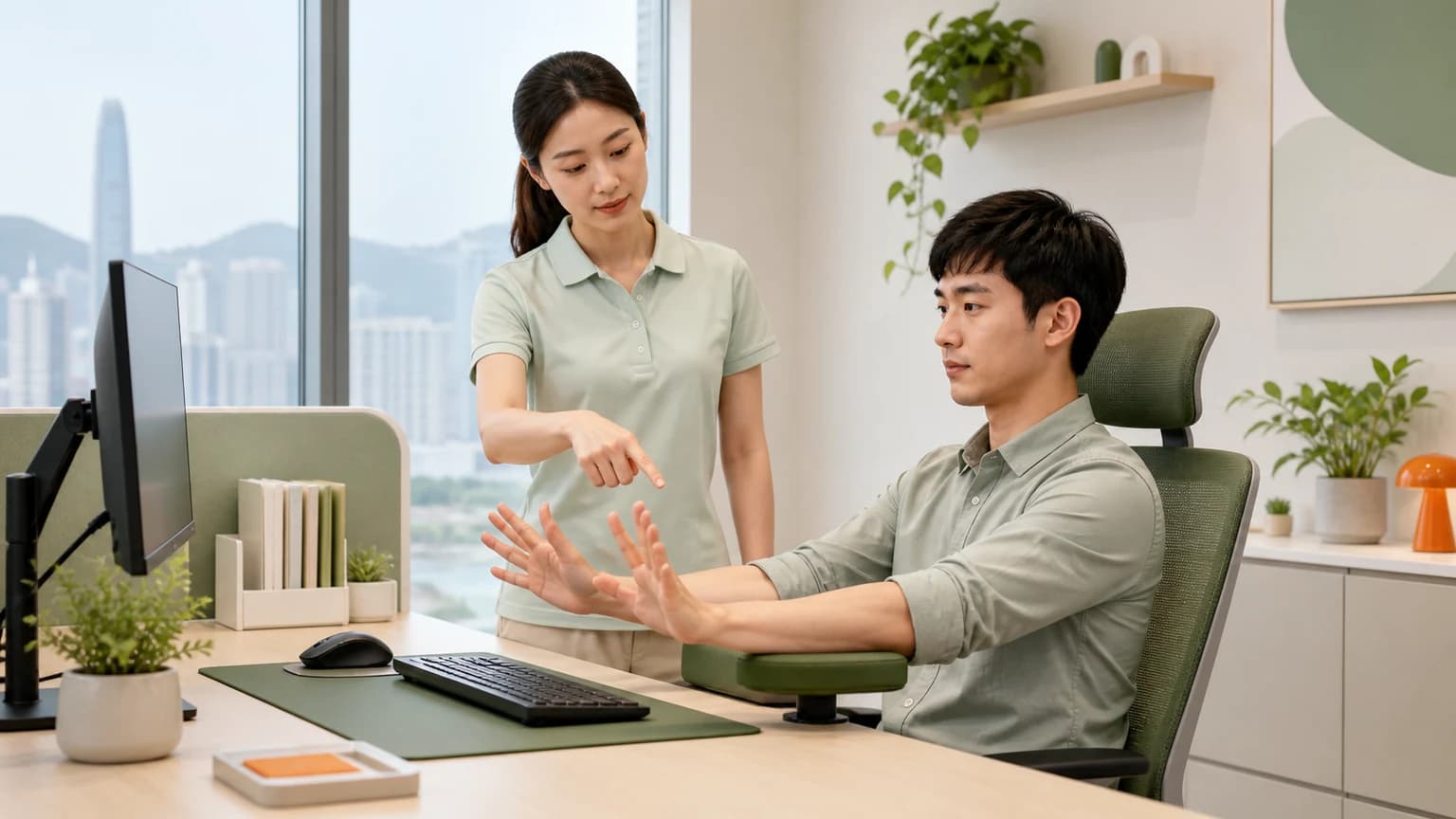
Cervical spondylosis and 'text neck': what the changes do and do not mean

Neck stiffness that is worse in the morning or after a long screen session, aching into the shoulder blade, sometimes a headache from the base of the skull — and, on a report, the words "cervical spondylosis". The report often worries people more than the symptoms do, which is usually the wrong way round.
What is actually going on
Spondylosis is a description of structural change — disc height, joint surfaces, small bony growths — that becomes more common with every decade and is frequently found in people who have never had neck pain. "Text neck" is a popular label for symptoms linked to long periods looking down, but the evidence that a particular head position causes lasting damage is weak. Symptoms alone cannot diagnose your neck; that requires an in-person examination, particularly to check whether nerves are involved.
How it usually behaves
- Neck stiffness worse in the morning or after long screen sessions
- Aching between the neck and the shoulder blade
- Headache starting at the base of the skull
- Pain, numbness or altered sensation in a strip down the arm
- A specific movement feeling weak, such as gripping or lifting the arm
Other explanations should stay in view: shoulder problems, nerve compression at the elbow or wrist, and some headache disorders can look similar, and more than one can be present at once.
What an assessment looks at
Neck and upper back movement are measured in each direction, along with the muscles that support the head and shoulder blades. Where symptoms reach the arm, sensation, power and reflexes are checked so that any later change can be compared against a baseline. Screen hours, sleep, driving and exercise are all part of the picture. Where you have already had imaging, it is read alongside the examination rather than being allowed to set expectations on its own.
What a plan may involve
Age-related change cannot be reversed, but tolerance, strength and movement can improve, and that is usually what changes symptoms. Depending on the assessment, a plan may combine neck and upper back movement work, endurance training for the neck and shoulder-blade muscles, screen and workload adjustments, and hands-on treatment or acupuncture where you consent and where they may ease symptoms. Your preferences guide the order, there is no fixed recipe, and the plan is adjusted as you respond over the following weeks.
What you can do day to day, and how progress is judged
The neck copes better with variety than with stillness, so the practical targets are shorter continuous screen blocks, a workable screen height, and two or three exercises brief enough to survive a busy week. Collars and prolonged rest usually make stiffness worse rather than better. A plan for a bad stretch is worth agreeing in advance, and each visit reviews neck movement, headache frequency, arm symptoms and your activity tolerance before anything is changed.
When to have it looked at medically
Most neck changes are managed well after a physiotherapy assessment, with your doctor involved where medication or imaging is needed. Arrange a prompt medical review if arm weakness is steadily increasing, if the neck pain began after a car crash, fall or blow to the head, if you feel feverish or unwell with a very stiff neck, or if you have unexplained weight loss or a history of cancer. A small number of people develop pressure on the spinal cord rather than a single nerve root. The changes below should be treated as urgent — go to an emergency department the same day instead of continuing rehabilitation:
- Weakness in the arms or legs that is progressing
- Numbness or altered sensation spreading to both hands, or down into the legs
- New clumsiness or loss of fine hand control — buttons, chopsticks or keys becoming difficult
- Unsteadiness, poor balance or a change in the way you walk
- New loss of bladder or bowel control
If this sounds like your situation, WhatsApp or call us to arrange an assessment.
Neck stiffness, headaches or arm symptoms with age-related neck changes? We assess movement, strength, screen use and nerve involvement before agreeing a practical plan with you.
Neck pain, a stiff neck or headaches linked to neck tension? Our Yau Ma Tei physiotherapists assess your symptoms, movement, work setup and sleep before agreeing a plan with you.
Lower back pain that limits sitting, bending, work or sleep? Our Yau Ma Tei physiotherapists assess your symptoms, movement and daily load, then agree an individual plan with you.
Assessment-led, hands-on physiotherapy to support comfort and movement. WhatsApp us to arrange an appointment, or call us if that is easier.