Runner's knee: front-of-knee pain and what load has to do with it
An ache around or behind the kneecap that builds during a run, hurts more going downstairs than up, and nags after a long spell sitting with the knee bent, is one of the most common problems in running. It is often called runner's knee; the clinical term is patellofemoral pain.
What is actually going on
Patellofemoral pain describes symptoms at the front of the knee, where the kneecap glides on the thigh bone. It is generally understood as a load-tolerance problem: the amount and type of loading has outpaced what the knee is currently prepared for. It is not proof of cartilage damage, and imaging rarely settles it. Symptoms described online cannot diagnose your knee — an in-person examination is what separates this from tendon, meniscal, hip-related or joint-surface problems.
How it usually behaves
- Ache around or behind the kneecap that builds during a run
- Pain going down stairs or downhill more than going up
- Discomfort after sitting with the knee bent for a long time
- Soreness with squats, lunges or getting up from a low seat
- Symptoms appearing after a jump in mileage or a new hill session
Other explanations should stay open. Patellar tendon problems, fat pad irritation, early joint surface changes and pain referred from the hip can look similar, and it is common for more than one to be contributing at the same time.
What an assessment looks at
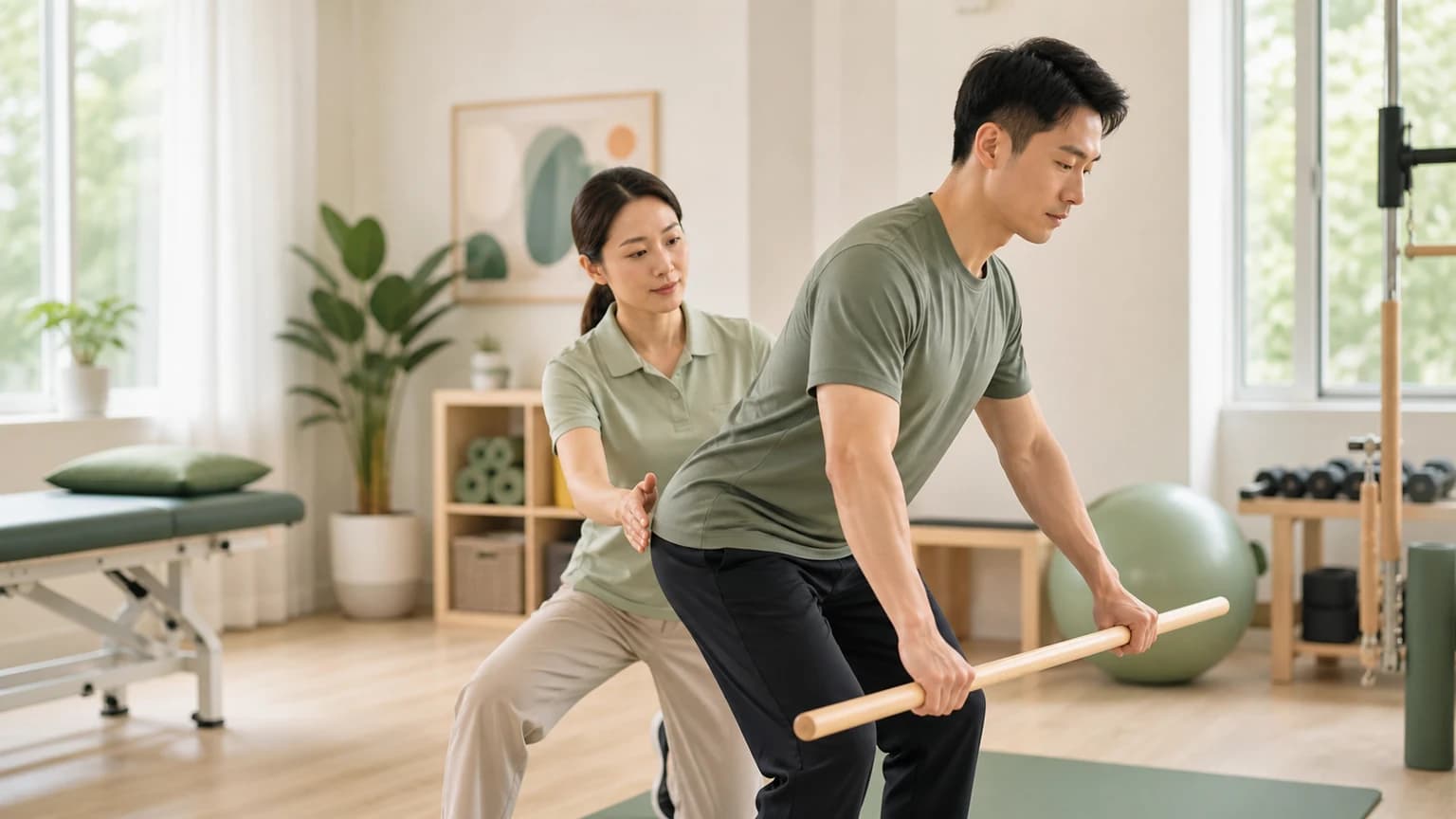
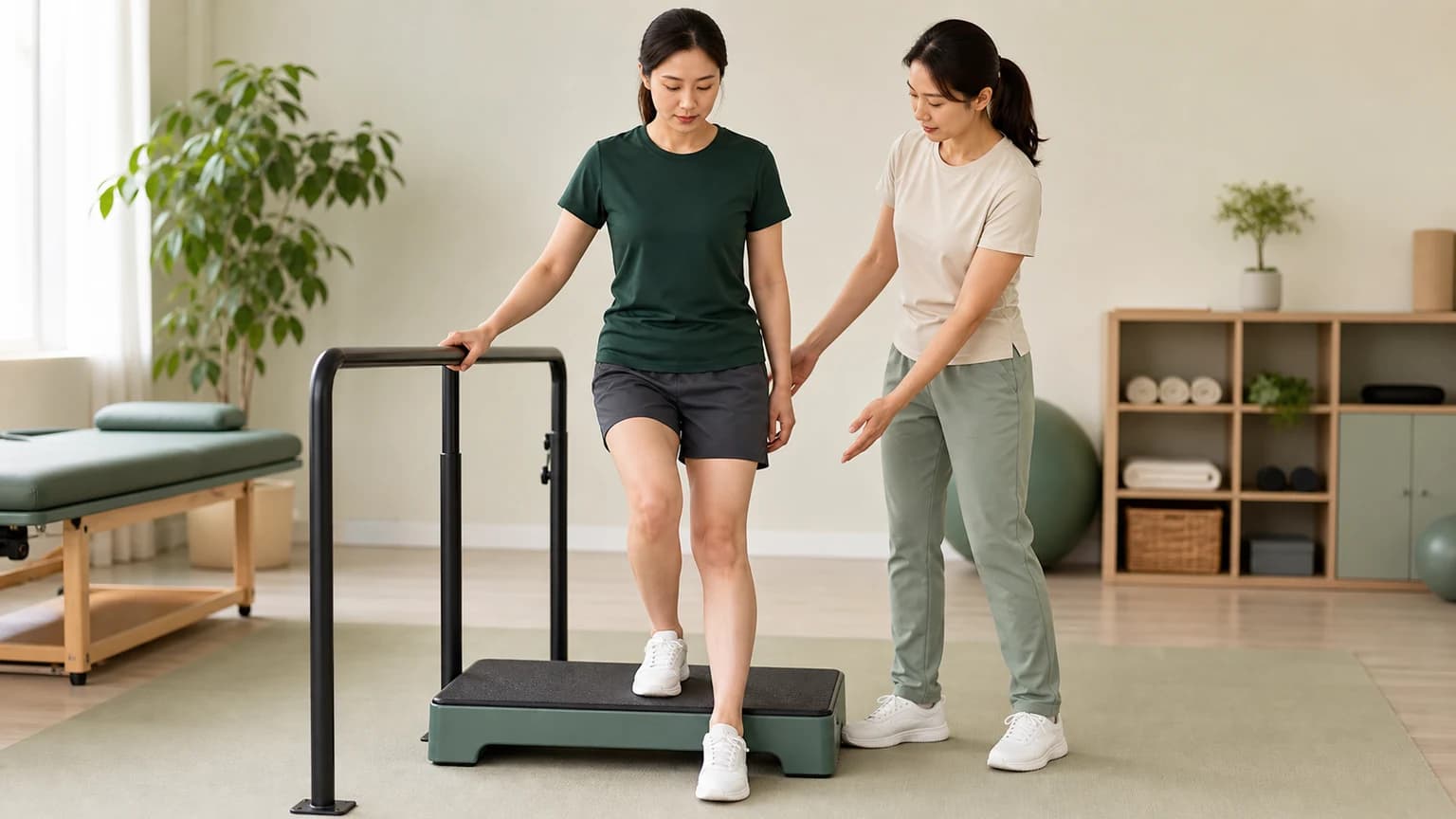
For a running-related knee, the training history is half the assessment: weekly distance, pace, surfaces, shoes, hills, and what changed in the four to six weeks before symptoms started. The physical part looks at knee and kneecap movement, thigh and hip strength, calf capacity, single-leg control, and how you squat, step down and run. The hip and lower back are checked as well, because both can refer pain to the front of the knee.
What a plan may involve
Most plans combine two things: a training adjustment that brings the load under your current threshold, and progressive strengthening for the quadriceps, hip and calf so that the threshold rises. Depending on the assessment, running cadence or footwear may be looked at, and taping, hands-on treatment or acupuncture added where you consent and where they may make training more comfortable. Your race plans and preferences shape the timeline. There is no fixed protocol, and the plan is adjusted according to how you respond week to week.
What you can do day to day, and how progress is judged
Runners rarely need to stop completely. What is usually needed is a version of running the knee can currently absorb — shorter, flatter, more frequent runs for a period, with strength work on the days between. Pain during the run and over the following 24 hours is the practical dosing guide. Planning for a flare-up week in advance means one bad session does not derail the block. Each visit reviews activity and load tolerance, strength markers and running comfort before the next step up.
When to have it looked at medically
Patellofemoral pain is well suited to a physiotherapy assessment and a load-based plan. Arrange a prompt medical review instead if the knee locks or gives way repeatedly; if it swells substantially or quickly; if it is hot and red with a fever; or if pain is sharply localised over bone and worsening with every run despite reducing your mileage, which can suggest a bone stress problem. Go to an emergency department the same day if the knee was injured and you cannot put weight through the leg, if the joint looks out of shape, or if the lower leg becomes cold, pale or numb.
If this sounds like your situation, WhatsApp or call us to arrange an assessment.
Front-of-knee pain when running, on stairs or after long sitting? We assess training load, hip and knee strength and running demands, then plan a graded return you agree with.
Knee pain on stairs, squatting, walking or running? We assess how the knee, hip and ankle share load, discuss what the findings mean, and agree a rehabilitation plan with you.
Lower back pain that limits sitting, bending, work or sleep? Our Yau Ma Tei physiotherapists assess your symptoms, movement and daily load, then agree an individual plan with you.
Neck pain, a stiff neck or headaches linked to neck tension? Our Yau Ma Tei physiotherapists assess your symptoms, movement, work setup and sleep before agreeing a plan with you.